<?xml version="1.0" encoding="UTF-8"?>
<feed xmlns="http://www.w3.org/2005/Atom">
  <title type="text">Project Des Moines</title>
  <updated>2026-04-17T19:40:25+00:00</updated>
  <generator uri="http://framework.zend.com" version="1.12.20">Zend_Feed_Writer</generator>
  <link rel="alternate" type="text/html" href="https://projectdesmoines.curatescape4.reclaim.hosting/"/>
  <link rel="self" type="application/atom+xml" href="https://projectdesmoines.curatescape4.reclaim.hosting/items/browse?output=rss2"/>
  <id>https://projectdesmoines.curatescape4.reclaim.hosting/</id>
  <author>
    <name>Project Des Moines</name>
    <uri>https://projectdesmoines.curatescape4.reclaim.hosting</uri>
  </author>
  <link rel="hub" href="https://pubsubhubbub.appspot.com/"/>
  <entry>
    <title type="html"><![CDATA[The University of Lawsonomy]]></title>
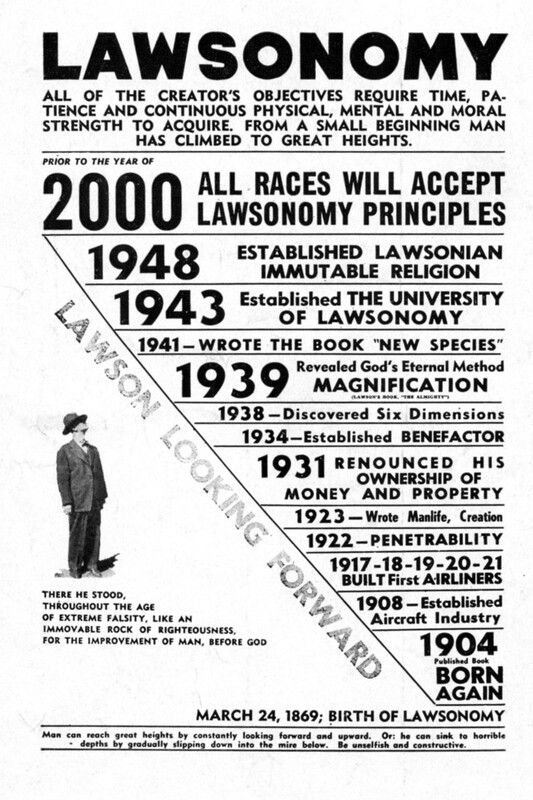
    <summary type="html"><![CDATA[<p><strong><em>The story of Alfred Lawson's utopian, non-profit university is one of the stranger episodes in the history of the Midwest.  </em></strong></p><img src="https://projectdesmoines.curatescape4.reclaim.hosting/files/fullsize/bdc74f02f1c741f74d7cefede91d8cbf.jpg" alt="Lawsonomy poster, circa 1950" /><br/><p>	In 1943, Alfred Lawson, former professional baseball player, manager, and owner, aviation pioneer, and more recently economic philosopher, purchased the six buildings and 14 acre grounds of the former University of Des Moines campus (closed since 1929) for $80,000.  The newly created University of Lawsonomy opened that fall with 70 students, who grew vegetables (part of the Lawsonian philosophy was a vegetarian diet, often eaten raw), and studied a curriculum based on the works of Alfred Lawson (around 50 books and numerous articles and pamphlets), covering subjects such as physiology, metaphysics, spirituality, theology, health, physics, economics, and the history of aircraft.  A degree certifying the holder as a ‘knowlegian’ could take 30 years or more to achieve.  </p><p>Who was Alfred Lawson?  That is a question with many answers.  He was born in London, England in 1869, and was first noted as a promising minor-league baseball player in the United States in the 1880s.  However, his first (and only) major-league season as a pitcher in 1890 ended quickly and ignominiously with no wins and no hits.  With this end to his career as a player, he moved into managing teams and players, assembling teams that played in Cuba, Europe, and Australia.  Eventually he owned some of these teams himself, which gave him the room to try some new ideas of his own.  During the early 1900s, he experimented with various innovations, trying out electric lights for night games and scheduling games between white teams and black teams.  </p><p>However, by the late 1900s his fertile imagination had been captured by something else: powered flight.  In 1908 he founded a magazine titled “Fly” – the first magazine devoted specifically to airplanes.  He later changed the title to “Aircraft”, and in fact this coined the word.  He became a pioneer in aviation himself, eventually designing and building what some argue was the first passenger airplane in 1919 and popularizing the word ‘airline’.  His airliner carried 18 people, had a projector onboard to show in-flight movies, and made a flight from Milwaukee to Chicago to a farm outside of Toledo and to Cleveland, then on to Buffalo, New York City, and Washington, D.C.  Perhaps because of a few crash landings on this initial journey, and the fact that his next (26 passenger) airliner crashed on its very first test flight in 1921, Lawson Airlines never really took off, and went bankrupt by 1922.  </p><p>After this disappointment, Lawson began to write more about his ideas and philosophies, starting with a book titled “Manlife” in 1923.  This and many other later books and articles received only minor interest until 1931, when the Great Depression brought attention to his economic philosophies.  Lawson declared he would spend the rest of his life propertyless and moneyless. He started the Direct Credits Society in 1931, publishing his own newspaper and pamphlets, and two years later it was among the more popular movements in the country, especially in the Midwest.  Thousands attended his speeches in Detroit and Chicago in the mid-1930s, despite them not being publicized in any mainstream media, and Lawson’s followers staged parades complete with marching bands, specially written songs, and snappy white uniforms.  The slogan of his Direct Credits Society was “Justice for Everybody Harms Nobody”, and his opposition to interest charges certainly had great appeal during the hardest years of the Depression – even if much of the rest of his writings and speeches were obscure and difficult to understand, including his ideas about good and evil microbes he called ‘menorgs’ and ‘disorgs’, the principles of zig-zag-and-swirl, discussions of six dimensions, and the ‘Law of Penetrability’.  </p><p>When the United States entered World War II, however, Lawson’s utopian sentiments and bizarre ideas lost appeal rapidly.  In 1943, when Lawson University opened its doors, he had only 70 students – a far cry from the thousands of followers he had led just a few years earlier (though he would still claim to have 2000 students).  In 1948, the tax assessor of Des Moines inspected the site and concluded that it was “a university in name only” and was better described as “a colony for a community within the community for the purpose of eulogizing Alfred Lawson”.  In the aftermath of WWII, Lawson also took the opportunity offered to educational institutions to buy up war surplus machine tools.  However, instead of using them for educational purposes, he ran a discreet side hustle selling some of this equipment off to private buyers within the US. This, of course, was not an activity allowed for a non-profit university who had been sold government property for pennies on the dollar, expecting it to be used for training students.  In 1952, this resulted in the now almost completely delusional Alfred Lawson being brought before a US Senate Investigative Committee where instead of protesting his innocence or seeking a plea deal, he used his time before the senators to try to explain Lawsonian religion and philosophy to them. They reacted with a mixture of amusement and irritation, and had the IRS revoke the nonprofit status given the university by the state, demanding it pay back taxes.  In response, Lawson closed the school.  Shortly thereafter, in 1954, Alfred Lawson died.  </p><p>A few years later, in 1957, a former student and follower named Merle Hayden reopened the University of Lawsonomy on a farm outside Racine, Wisconsin.  This property had previously been the University of Lawsonomy Farm, and now formed the whole of the campus.  The university operated in this location with no tuition or fees (and very few students) until 2017, when Merle Hayden, the last Lawsonian, died.  </p><p>The Des Moines site of the University of Lawsonomy, at 2nd and Euclid in Highland Park, is now occupied by the Park Fair Mall.  </p><p><em><strong><a href="https://projectdesmoines.curatescape4.reclaim.hosting/items/show/67">For more (including 7 images) view the original article</a></strong></em></p>]]></summary>
    <published>2022-07-14T16:54:58+00:00</published>
    <updated>2026-04-17T19:40:25+00:00</updated>
    <link rel="alternate" type="text/html" href="https://projectdesmoines.curatescape4.reclaim.hosting/items/show/67"/>
    <id>https://projectdesmoines.curatescape4.reclaim.hosting/items/show/67</id>
    <author>
      <name>DMPL Team</name>
    </author>
  </entry>
  <entry>
    <title type="html"><![CDATA[Greenwood Park: Des Moines&#039; First Park]]></title>
    <summary type="html"><![CDATA[<img src="https://projectdesmoines.curatescape4.reclaim.hosting/files/fullsize/17752786d89007feb77cc451aef44164.jpg" alt="The lake at Greenwood Park" /><br/><p>The 81 acre lot to the west of Des Moines that would become Greenwood Park had begun to be developed as a private park by the original owner, T.E. Brown – believing that the location and the landscape was perfect for a park, he had cleared the undergrowth, built roads, and dammed up a creek to create a lake, all at his own expense.  The city purchased this land after his death as part of a larger program to acquire land for parks as Des Moines expanded rapidly.  Because this particular land had already been prepared and landscaped as a park, it was the first of these acquisitions to open to the public, in 1894.  </p><p>The early work on the property had created the basics of an appealing public park, but the parks commission had many more improvements in mind.  They drilled a 2500 foot deep artesian well in 1895, and then raised the level of the lake by three feet in 1897.  In 1901, they adopted a landscaping plan submitted by Nelson’s of Chicago, a respected firm responsible for many other major parks around the country, such as Lincoln Park in Chicago.  This plan included a pavilion, opened in 1909.  </p><p>In the early 1900s, the park was also home to a herd of elk, as well as a small herd of bison – these were popular for photos and postcards of the time.  Canoeing and fishing on the lake were popular activities, and the site was a favorite for picnics.  Over the years, many more features were added: an adjoining lot was donated to the city in 1924 and named Ashworth Park.  By 1926, the city built and opened Ashworth pool close to the edge of Greenwood Park, adding to the recreation options.  In 1931, the Sylvan Theater opened, and the Rose Garden was added in 1933.  The Des Moines Art Center was built in the park in 1948.  </p><p>The park now includes public trails, a spray paint area, and kids play area as well as most of the original features – though not the elk and bison!  </p><p><em><strong><a href="https://projectdesmoines.curatescape4.reclaim.hosting/items/show/66">For more (including 6 images) view the original article</a></strong></em></p>]]></summary>
    <published>2022-04-14T15:53:33+00:00</published>
    <updated>2026-04-17T19:40:25+00:00</updated>
    <link rel="alternate" type="text/html" href="https://projectdesmoines.curatescape4.reclaim.hosting/items/show/66"/>
    <id>https://projectdesmoines.curatescape4.reclaim.hosting/items/show/66</id>
    <author>
      <name>DMPL Team</name>
    </author>
  </entry>
  <entry>
    <title type="html"><![CDATA[Early Des Moines Bicycle History: High wheels, the safety bicycle boom, and beyond]]></title>
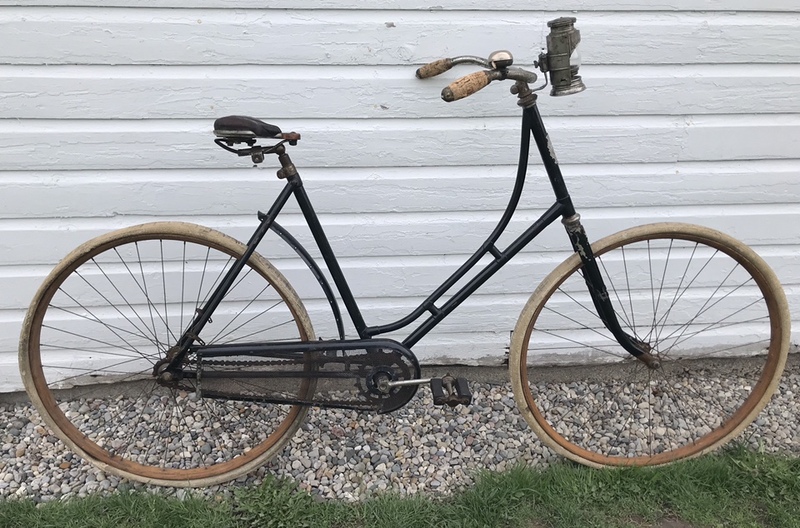
    <summary type="html"><![CDATA[<p><strong><em>Everyone in America were riding bicycles in 1896, and the people of Des Moines were no exception.  </em></strong></p><img src="https://projectdesmoines.curatescape4.reclaim.hosting/files/fullsize/fde108f6a9f6737cd1089f9152b7e410.jpg" alt="1895 Pacemaker women&#039;s bicycle" /><br/><p>At the end of the 19th century, technology was on the move - literally.  After the emergence and dominance of railroads in the middle of the 19th century, the next major transportation revolution was smaller-scale, and much more personal.  The initial invention of the bicycle in 1866, and its first brief burst of popularity as a fad on the east coast of America during the fall and winter of 1868-69, had almost no impact in the then-new city of Des Moines, far to the west.  However, the high wheel bicycles of the 1880s began to interest and engage its citizens, and by the 1890s the safety bicycle took hold in Des Moines, as it did everywhere in America, in what has been called the “Bicycle Boom”.  </p><p>In the 1880s, the high-wheel bicycle (or ‘ordinary bicycle’, as they were called at the time) was state-of-the-art transportation technology.  They were exquisitely and precisely made, showcasing the new technologies of ball-bearings, electroplated metals, and lightweight steel alloys.  They were expensive, showy, and usually owned and operated by the young, well-off members of the middle class.  The Iowa Wheelmen during the high-wheel era were a small, but very visible riding club.  The high riding position on an ordinary bicycle was more familiar to people of the time, since it closely approximates the height of a rider on a horse.  Despite this, the bicycles certainly attracted attention everywhere they went, and the machines were widely admired for their smooth, quiet, efficient operation – the epitome of modern technology.  People at the time were amazed by the distances that cyclists could cover under their own power, and races were frequently held in Iowa (and elsewhere) pitting cyclists against horse-riders.  The cyclists often won, especially over longer distances.  </p><p>During the 1880s, women rode high-wheel tricycles, which better accommodated women’s fashions.  The influence of female riders was important in the early development of cycle touring as a pastime, and women set their own speed and distance records too.  </p><p>In the early 1890s, the invention of the pneumatic tire made a new style of bicycle popular, called the ‘safety’.  This is recognizable as a modern bicycle, and its lower cost, less intimidating design, and easier ride made it an immediate hit.  By 1896, at the height of the boom, a large percentage of the population were riding bikes.  There was an entire page of the newspaper devoted to cycling in the summer of 1896, and bicycles were used for commuting, racing, touring, courting, and picnics, to give just a few examples.  Besides regular people's riding activities, bicycle racing was a major spectator sport, and numerous cycling-related products were available everywhere.  </p><p>36 bicycle brands were made and distributed in Iowa during the 1890s, three of them in Des Moines.  The most prominent of these was the Kenyon Bicycle Manufacturing Company, founded in 1891 and initially located at 205 6th Avenue.  The company changed hands a couple of times, changing its name to the Pacemaker Bicycle Manufacturing Company, and then back to the Kenyon-Cooper Bicycle Company.  Under this name in 1896 the company had a factory located at 818/820 Grand Avenue, and a retail location at 805 Locust.  Because of their commitment to building very high quality bicycles, combined with their attempts to price them low enough to get market share, the company was one of the very few bicycle companies to go bankrupt at the height of the bicycle boom.  It reorganized afterwards and kept going through the early 1900s.  </p><p>After 1896, the bicycle boom faded, and cycling was no longer central to culture and technology the way it had been just a few years before.  Wealthy consumers focused on conspicuous consumption purchased automobiles and motorcycles, and the racers mostly followed along to these new machines.  However, cycling proved to be extremely important to the development of further transportation technology - almost all early automobiles used bicycle patents and concepts for various parts (differential, rack and pinion steering, bearing designs, etc.), and, famously, Orville and Wilbur Wright were bicycle mechanics before they moved on to building airplanes.  </p><p><em><strong><a href="https://projectdesmoines.curatescape4.reclaim.hosting/items/show/65">For more (including 10 images) view the original article</a></strong></em></p>]]></summary>
    <published>2022-03-11T16:31:40+00:00</published>
    <updated>2026-04-17T19:40:25+00:00</updated>
    <link rel="alternate" type="text/html" href="https://projectdesmoines.curatescape4.reclaim.hosting/items/show/65"/>
    <id>https://projectdesmoines.curatescape4.reclaim.hosting/items/show/65</id>
    <author>
      <name>DMPL Team</name>
    </author>
  </entry>
  <entry>
    <title type="html"><![CDATA[DMPL Outreach Vehicles]]></title>
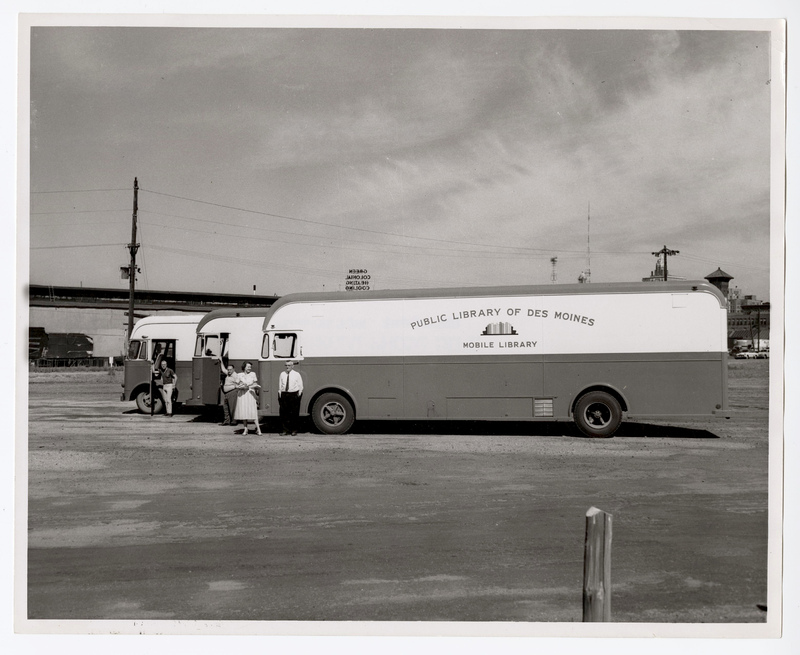
    <summary type="html"><![CDATA[<p><strong><em>For over 85 years, DMPL has brought services to the community with the help of outreach vehicles </em></strong></p><img src="https://projectdesmoines.curatescape4.reclaim.hosting/files/fullsize/84cfa80a13470b9f29d64949dfa27987.jpg" alt="Bookmobile Fleet" /><br/><p>Whether they wanted to check out books about dinosaurs, listen to the strum of a guitar played by a library staff member, or simply get a break from the summer heat, Des Moines citizens flocked to the library’s bookmobiles. What began in 1937 as a trailer full of library materials has evolved and changed throughout the decades to bring library access to the people of Des Moines when they can’t make it to the physical buildings. </p><p>Outreach vehicles have been a mainstay of the Des Moines Public Library for 85 years. Beginning in 1937, a trailer fitted with shelves of books visited neighborhood gatherings twice a week. This trailer appeared at anything from elementary schools to community buildings, even offices and city playgrounds.</p><p>In 1946, the first true mobile library was created from a refurbished federal ordnance plant bus, and by 1958, a fleet of three thirty-five-foot, air-conditioned libraries on wheels were traversing the Des Moines neighborhoods. Each bookmobile held around 4,200 books, and in 1963 alone, nearly 323,00 books were circulated through the bookmobile program accounting for 25% of the total library circulation and 36% of youth circulation. </p><p>Unfortunately, the last of these bookmobiles ceased operation in Des Moines by 1981 due to budget constraints and the construction of more physical branches. The bookmobiles were sold and repurposed. One bookmobile was sold to the Sioux City Library, one to the City of Des Moines police department as a crime prevention unit, and one sent by the Des Moines Sister City commission to Naulcalpan, Mexico. </p><p>As bookmobiles were being phased out, other outreach vehicles took their place. The Wee Pals Outreach Bookmobile began its route in 1971. With a cartoon cast of characters painted on the side by Morrie Turner, the Wee Pals bookmobile visited preschools and community centers throughout the city bringing programs to citizens who couldn’t make it to the physical buildings. By 1973, the Wee Pals bookmobile was replaced with Rosie, the multi-media outreach van. The Rosie van was packed with books, movies, projectors, and storytelling props and made over 150 visits per month to community centers, senior citizens residences, the Polk County jail, and other locations to provide free material from the library. Another van, known as Carrie, was used to transport individuals and groups to the Mid-City Library. It was a yellow fourteen-passenger van. You couldn’t miss it.</p><p>Though the Carrie van is no longer in service, an iteration of the Rosie van is still running. It even got a major renovation in 2021 and is back on the road now. </p><p><em><strong><a href="https://projectdesmoines.curatescape4.reclaim.hosting/items/show/64">For more (including 11 images) view the original article</a></strong></em></p>]]></summary>
    <published>2022-02-09T15:31:23+00:00</published>
    <updated>2026-04-17T19:40:25+00:00</updated>
    <link rel="alternate" type="text/html" href="https://projectdesmoines.curatescape4.reclaim.hosting/items/show/64"/>
    <id>https://projectdesmoines.curatescape4.reclaim.hosting/items/show/64</id>
    <author>
      <name>DMPL Team</name>
    </author>
  </entry>
  <entry>
    <title type="html"><![CDATA[The Flood of 1993]]></title>
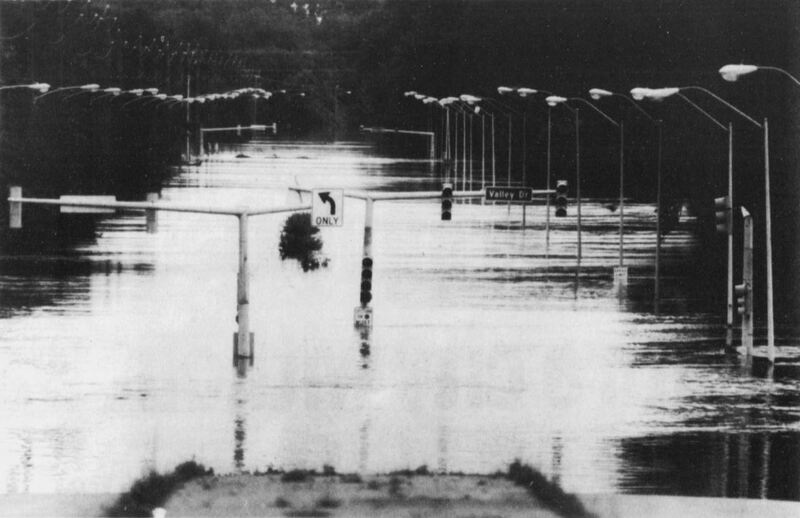
    <summary type="html"><![CDATA[<p><strong><em>The "flood of the century" caused great damage to the city of Des Moines, and no one who lived through it was untouched.  </em></strong></p><img src="https://projectdesmoines.curatescape4.reclaim.hosting/files/fullsize/bb531ee697bf357a0d3dca5e46260d7c.jpg" alt="Fleur Drive, July 12th, 1993" /><br/><p>Des Moines was one of many locations in Iowa affected by record flooding during the summer of 1993. Heavy snows earlier in the year, followed by a series of major rainstorms in the summer, led to higher water levels than were predicted by the National Weather Service. </p><p>By Saturday, July 10th, the Raccoon River was reaching levels of 23 feet, finally topping out over 25 feet early on Sunday morning. These unexpected flood levels caught the Des Moines Waterworks off guard – left out of the city’s flood planning, they had made their own arrangements, which were based on the National Weather Service’s unfortunately incorrect predictions. When the river topped their levee and water began to enter the water plant at 1am on Sunday morning, July 12th, they were forced to turn off the power and shut down the plant. The flooding of the waterworks left more than 250,000 Des Moines residents without water, while more than 40,000 were without power. </p><p>In the aftermath, the entire state was declared a disaster area, and the drinking water situation in Des Moines lasted until July 30th. The Des Moines Register offices and printing equipment were affected by the flood, and the paper was printed using the equipment at the offices of the Wall Street Journal in West Des Moines for the duration of the crisis. As they reported on Monday, July 12th, "The unprecedented extent of flooding and the magnitude of the damage left no area of central Iowa unaffected. Traffic was paralyzed, commerce was reduced to a standstill and basements were flooded. The most basic of human tasks were rendered impossible. For most residents of central Iowa, life [on] Sunday boiled down to two goals: finding safe water and regaining electrical service." </p><p>The flooding also damaged more than 40 bridges, and temporarily closed sections of interstate 35 and 80. Des Moines residents canoed through the streets and the old Des Moines Public Library main branch, located directly on the riverbank, had to have 18 truckloads of water pumped out of its basement during the cleanup. All of the books had to be hand-carried above the flood water.</p><p>The flood of 1993 was the largest to date for the Raccoon River basin, surpassing the floods of 1947, 1958, and 1979.  <span>Over 10,000 people were evacuated from their homes and 21,000 homes were damaged - many of them destroyed. During the summer of 1993 some locations saw rain each day for 130 consecutive days. Some areas flooded more than 5 times. Agricultural yields dropped by 62 percent.</span> The submergence and shutdown of the waterworks made the disaster particularly difficult for Des Moines residents, and the cost of the damages was estimated to be over $3.2 billion.  <span>As newspapers of the time said, "this type of natural disaster happens very, very rarely."</span></p><p><em><strong><a href="https://projectdesmoines.curatescape4.reclaim.hosting/items/show/63">For more (including 9 images) view the original article</a></strong></em></p>]]></summary>
    <published>2022-01-27T21:47:05+00:00</published>
    <updated>2026-04-17T19:40:25+00:00</updated>
    <link rel="alternate" type="text/html" href="https://projectdesmoines.curatescape4.reclaim.hosting/items/show/63"/>
    <id>https://projectdesmoines.curatescape4.reclaim.hosting/items/show/63</id>
    <author>
      <name>DMPL Team</name>
    </author>
  </entry>
</feed>