<?xml version="1.0" encoding="UTF-8"?>
<feed xmlns="http://www.w3.org/2005/Atom">
  <title type="text">Project Des Moines</title>
  <updated>2026-04-17T19:40:25+00:00</updated>
  <generator uri="http://framework.zend.com" version="1.12.20">Zend_Feed_Writer</generator>
  <link rel="alternate" type="text/html" href="https://projectdesmoines.curatescape4.reclaim.hosting/"/>
  <link rel="self" type="application/atom+xml" href="https://projectdesmoines.curatescape4.reclaim.hosting/items/browse?output=rss2"/>
  <id>https://projectdesmoines.curatescape4.reclaim.hosting/</id>
  <author>
    <name>Project Des Moines</name>
    <uri>https://projectdesmoines.curatescape4.reclaim.hosting</uri>
  </author>
  <link rel="hub" href="https://pubsubhubbub.appspot.com/"/>
  <entry>
    <title type="html"><![CDATA[DMPL Outreach Vehicles]]></title>
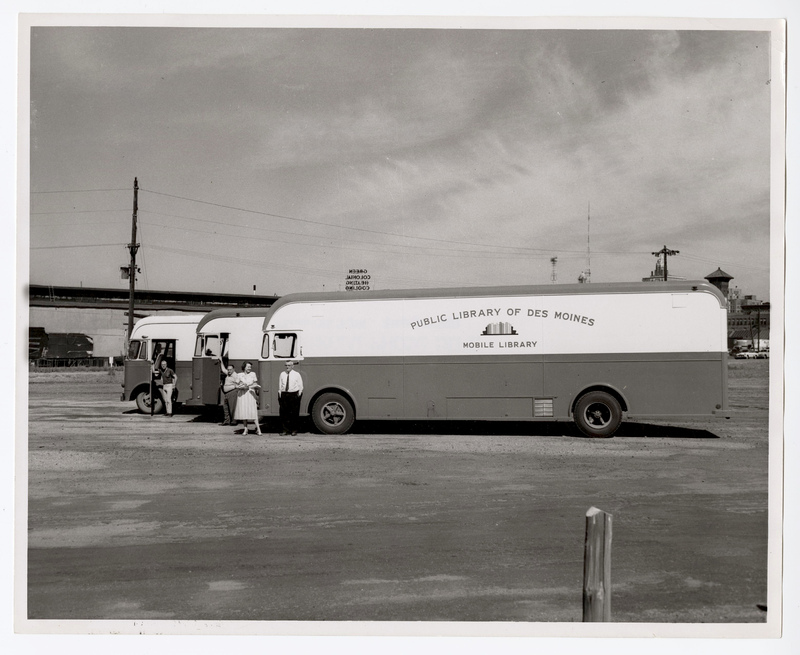
    <summary type="html"><![CDATA[<p><strong><em>For over 85 years, DMPL has brought services to the community with the help of outreach vehicles </em></strong></p><img src="https://projectdesmoines.curatescape4.reclaim.hosting/files/fullsize/84cfa80a13470b9f29d64949dfa27987.jpg" alt="Bookmobile Fleet" /><br/><p>Whether they wanted to check out books about dinosaurs, listen to the strum of a guitar played by a library staff member, or simply get a break from the summer heat, Des Moines citizens flocked to the library’s bookmobiles. What began in 1937 as a trailer full of library materials has evolved and changed throughout the decades to bring library access to the people of Des Moines when they can’t make it to the physical buildings. </p><p>Outreach vehicles have been a mainstay of the Des Moines Public Library for 85 years. Beginning in 1937, a trailer fitted with shelves of books visited neighborhood gatherings twice a week. This trailer appeared at anything from elementary schools to community buildings, even offices and city playgrounds.</p><p>In 1946, the first true mobile library was created from a refurbished federal ordnance plant bus, and by 1958, a fleet of three thirty-five-foot, air-conditioned libraries on wheels were traversing the Des Moines neighborhoods. Each bookmobile held around 4,200 books, and in 1963 alone, nearly 323,00 books were circulated through the bookmobile program accounting for 25% of the total library circulation and 36% of youth circulation. </p><p>Unfortunately, the last of these bookmobiles ceased operation in Des Moines by 1981 due to budget constraints and the construction of more physical branches. The bookmobiles were sold and repurposed. One bookmobile was sold to the Sioux City Library, one to the City of Des Moines police department as a crime prevention unit, and one sent by the Des Moines Sister City commission to Naulcalpan, Mexico. </p><p>As bookmobiles were being phased out, other outreach vehicles took their place. The Wee Pals Outreach Bookmobile began its route in 1971. With a cartoon cast of characters painted on the side by Morrie Turner, the Wee Pals bookmobile visited preschools and community centers throughout the city bringing programs to citizens who couldn’t make it to the physical buildings. By 1973, the Wee Pals bookmobile was replaced with Rosie, the multi-media outreach van. The Rosie van was packed with books, movies, projectors, and storytelling props and made over 150 visits per month to community centers, senior citizens residences, the Polk County jail, and other locations to provide free material from the library. Another van, known as Carrie, was used to transport individuals and groups to the Mid-City Library. It was a yellow fourteen-passenger van. You couldn’t miss it.</p><p>Though the Carrie van is no longer in service, an iteration of the Rosie van is still running. It even got a major renovation in 2021 and is back on the road now. </p><p><em><strong><a href="https://projectdesmoines.curatescape4.reclaim.hosting/items/show/64">For more (including 11 images) view the original article</a></strong></em></p>]]></summary>
    <published>2022-02-09T15:31:23+00:00</published>
    <updated>2026-04-17T19:40:25+00:00</updated>
    <link rel="alternate" type="text/html" href="https://projectdesmoines.curatescape4.reclaim.hosting/items/show/64"/>
    <id>https://projectdesmoines.curatescape4.reclaim.hosting/items/show/64</id>
    <author>
      <name>DMPL Team</name>
    </author>
  </entry>
  <entry>
    <title type="html"><![CDATA[The Flood of 1993]]></title>
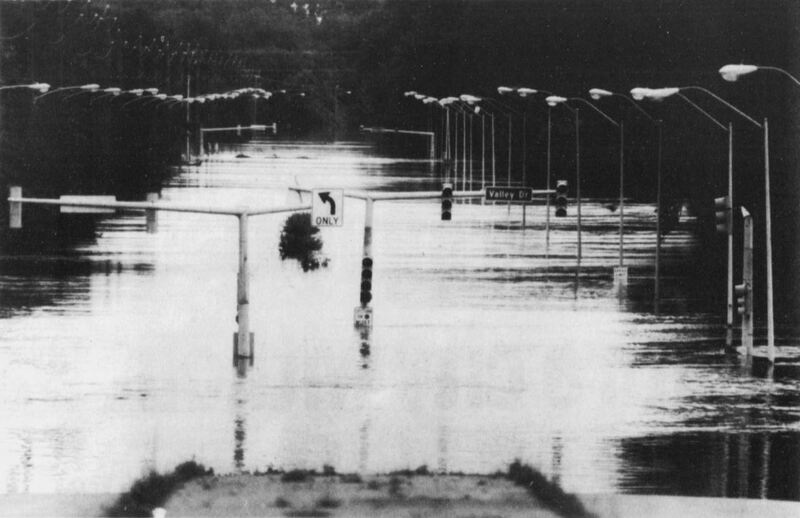
    <summary type="html"><![CDATA[<p><strong><em>The "flood of the century" caused great damage to the city of Des Moines, and no one who lived through it was untouched.  </em></strong></p><img src="https://projectdesmoines.curatescape4.reclaim.hosting/files/fullsize/bb531ee697bf357a0d3dca5e46260d7c.jpg" alt="Fleur Drive, July 12th, 1993" /><br/><p>Des Moines was one of many locations in Iowa affected by record flooding during the summer of 1993. Heavy snows earlier in the year, followed by a series of major rainstorms in the summer, led to higher water levels than were predicted by the National Weather Service. </p><p>By Saturday, July 10th, the Raccoon River was reaching levels of 23 feet, finally topping out over 25 feet early on Sunday morning. These unexpected flood levels caught the Des Moines Waterworks off guard – left out of the city’s flood planning, they had made their own arrangements, which were based on the National Weather Service’s unfortunately incorrect predictions. When the river topped their levee and water began to enter the water plant at 1am on Sunday morning, July 12th, they were forced to turn off the power and shut down the plant. The flooding of the waterworks left more than 250,000 Des Moines residents without water, while more than 40,000 were without power. </p><p>In the aftermath, the entire state was declared a disaster area, and the drinking water situation in Des Moines lasted until July 30th. The Des Moines Register offices and printing equipment were affected by the flood, and the paper was printed using the equipment at the offices of the Wall Street Journal in West Des Moines for the duration of the crisis. As they reported on Monday, July 12th, "The unprecedented extent of flooding and the magnitude of the damage left no area of central Iowa unaffected. Traffic was paralyzed, commerce was reduced to a standstill and basements were flooded. The most basic of human tasks were rendered impossible. For most residents of central Iowa, life [on] Sunday boiled down to two goals: finding safe water and regaining electrical service." </p><p>The flooding also damaged more than 40 bridges, and temporarily closed sections of interstate 35 and 80. Des Moines residents canoed through the streets and the old Des Moines Public Library main branch, located directly on the riverbank, had to have 18 truckloads of water pumped out of its basement during the cleanup. All of the books had to be hand-carried above the flood water.</p><p>The flood of 1993 was the largest to date for the Raccoon River basin, surpassing the floods of 1947, 1958, and 1979.  <span>Over 10,000 people were evacuated from their homes and 21,000 homes were damaged - many of them destroyed. During the summer of 1993 some locations saw rain each day for 130 consecutive days. Some areas flooded more than 5 times. Agricultural yields dropped by 62 percent.</span> The submergence and shutdown of the waterworks made the disaster particularly difficult for Des Moines residents, and the cost of the damages was estimated to be over $3.2 billion.  <span>As newspapers of the time said, "this type of natural disaster happens very, very rarely."</span></p><p><em><strong><a href="https://projectdesmoines.curatescape4.reclaim.hosting/items/show/63">For more (including 9 images) view the original article</a></strong></em></p>]]></summary>
    <published>2022-01-27T21:47:05+00:00</published>
    <updated>2026-04-17T19:40:25+00:00</updated>
    <link rel="alternate" type="text/html" href="https://projectdesmoines.curatescape4.reclaim.hosting/items/show/63"/>
    <id>https://projectdesmoines.curatescape4.reclaim.hosting/items/show/63</id>
    <author>
      <name>DMPL Team</name>
    </author>
  </entry>
</feed>